


Chile Moves to Expand Migrant Data Access Rules
Chile’s government is seeking broader access to migrant data through educational and health institutions as part of proposed deportation reforms.

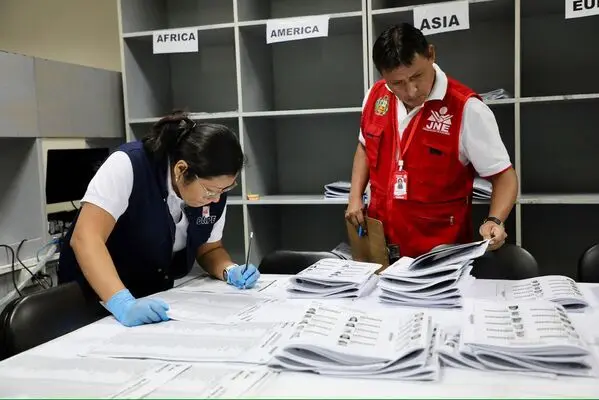
Chile’s government is advancing a proposal to expand state access to migrant data through schools and healthcare institutions. Photo: EFE
May 15, 2026 Hour: 3:51 am
🔗 Comparte este artículo
Government proposal would require schools and hospitals to share data on irregular migrants with authorities.
The Chilean government is pushing a legislative amendment that would require educational and health institutions to provide information on irregular migrants to state authorities as part of efforts to strengthen administrative expulsion procedures.
RELATED: Chile Rules Out Modifying the Three-Ground Abortion Law
The proposal was introduced by the administration of President José Antonio Kast during a parliamentary session reviewing a bill aimed at improving deportation processes, according to local media reports published Thursday.
Under the proposed amendment, “every organ of the State Administration, public or private health or social security institution or agency, and public or private educational establishment, shall be obliged to provide the migration and supervisory administrative authority with the information they require.”
Text Reads: The Chilean government, led by President José Antonio Kast, is promoting a legislative reform that would require educational and healthcare institutions to provide information on undocumented migrants to the authorities. 🔴 According to the proposal, all government agencies, social security organizations, and public and private healthcare and educational centers would be obligated to provide the information requested by immigration and control authorities.
The text specifies that authorities could request “address, telephone number, email and other relevant data of foreigners who are subject to ongoing migration procedures.”
According to Chile’s National Statistics Institute (INE), more than 330,000 foreign nationals currently live in the country under irregular conditions, most of them Venezuelans.
Speaking at a press conference on Thursday, Kast said the measure was necessary to “organize” the social services provided by the state. He argued that “the only way to organize is to know who uses the different public services.”
“The number of patients treated in health centers, where the per capita funding is not enough to generate all services, is important, we have to organize it. In education it is the same,” the president said.
Kast won last December’s presidential election on a platform centered on tougher measures against irregular migration, which he has linked to rising crime levels.
Text Reads: The president expanded on his remarks from yesterday regarding the impossibility of expelling 300,000 migrants in a single day, as he had promised during the campaign. On that occasion, Kast clarified that his statements, rather than a metaphor, were a hyperbole; but he assured that citizens are currently seeing how migrants are voluntarily leaving the country and how the border closure has reduced clandestine entries.
Following public debate over the proposal, Chile’s Interior Ministry stated that “no one is going to be persecuting children because they are protected under International Law.”
The ministry added that the measure seeks to obtain information held by educational institutions “regarding responsible adults.”
“We are not saying that exhaustive checking procedures will be initiated in every institution that the law may allow, but simply that there should be the possibility of accessing certain information, perhaps in a more specific, more targeted way, instead of through a massive request,” the ministry said.